 Mule Dumpster Rental
Milwaukee Dumpster Size Guide
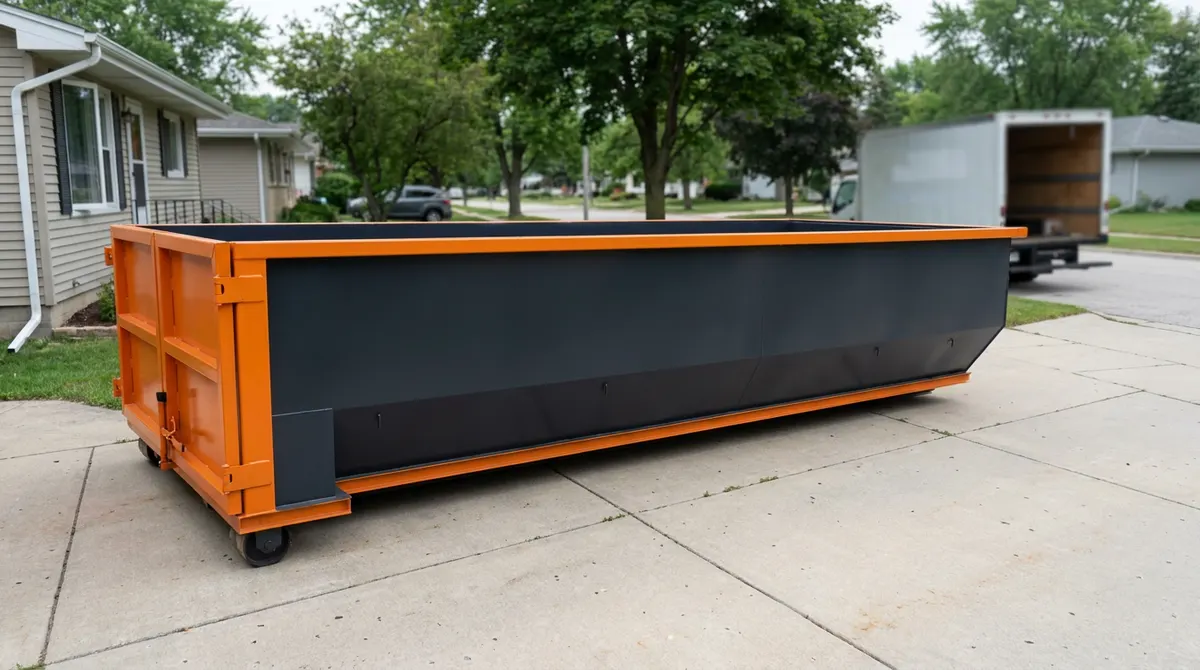
Choosing the correct dumpster size for a project in Milwaukee, WI, involves assessing the type and volume of debris, considering local conditions like narrow city lots, and understanding common project needs from home cleanouts to major renovations.
Matching Dumpster Size to Your Project
<p>Selecting the appropriate dumpster size prevents overfilling and additional costs, ensuring efficient waste removal for projects across Milwaukee neighborhoods like Bay View or Sherman Park. The cubic yard measurement indicates volume; a 10-yard dumpster, for instance, holds 10 cubic yards of material, equivalent to about four standard pickup truck loads. This table outlines common dumpster sizes and their typical applications.</p><table><thead><tr><th>Dumpster Size</th><th>Approximate Capacity</th><th>Common Project Types</th><th>Typical Debris</th></tr></thead><tbody><tr><td><strong>10-Yard Dumpster</strong></td><td>10 cubic yards (~4 pickup loads)</td><td>Small bathroom remodels, single-room cleanouts, yard waste cleanup</td><td>Tile, drywall, small amounts of concrete, branches</td></tr><tr><td><strong>15-Yard Dumpster</strong></td><td>15 cubic yards (~6 pickup loads)</td><td>Medium kitchen remodels, basement cleanouts, deck demolition (up to 250 sq ft)</td><td>Cabinets, appliances, wood, plaster (common in Milwaukee's older homes)</td></tr><tr><td><strong>20-Yard Dumpster</strong></td><td>20 cubic yards (~8 pickup loads)</td><td>Full kitchen or two-bathroom remodels, roof tear-offs (up to 30 squares), larger home cleanouts</td><td>Shingles, lumber, large furniture, general construction debris</td></tr><tr><td><strong>30-Yard Dumpster</strong></td><td>30 cubic yards (~12 pickup loads)</td><td>Major home additions, new construction, large-scale commercial cleanouts, whole-house renovations</td><td>Heavy demolition waste, large quantities of wood, metal, masonry</td></tr><tr><td><strong>40-Yard Dumpster</strong></td><td>40 cubic yards (~16 pickup loads)</td><td>Commercial construction, large demolition projects, significant estate cleanouts</td><td>Industrial waste, large volumes of light debris, multi-room renovation debris</td></tr></tbody></table>
Size by Job Type: Cleanout, Reno, Roofing, Concrete
<p>Different project types generate distinct volumes and types of waste, impacting the ideal dumpster size for Milwaukee residents. Understanding the specific demands of a job, from a simple garage cleanout in Enderis Park to a large roofing project near Interstate 43, is crucial for efficient waste management. This table provides guidance based on typical project scopes.</p><table><thead><tr><th>Project Type</th><th>Typical Dumpster Size Recommendation</th><th>Considerations for Milwaukee Projects</th></tr></thead><tbody><tr><td><strong>Home Cleanout (Garage, Basement, Attic)</strong></td><td>10-yard or 15-yard</td><td>Seasonal basement flooding cleanouts (due to lake-effect snow and spring thaw) often require quick roll-offs for water-damaged items. Smaller sizes fit better on dense city lots in neighborhoods like Riverwest.</td></tr><tr><td><strong>Small Remodel (Bathroom, Single Room)</strong></td><td>10-yard</td><td>For pre-1978 homes in Milwaukee, lath-and-plaster and lead paint debris add weight; a 10-yard is often sufficient but weight limits should be noted.</td></tr><tr><td><strong>Medium Remodel (Kitchen, Two Rooms)</strong></td><td>15-yard or 20-yard</td><td>Demolition of old cabinetry, countertops, and appliances fits well. If structural changes are involved, generating more lumber or drywall, a 20-yard may be more appropriate.</td></tr><tr><td><strong>Roofing Tear-Off (up to 30 squares)</strong></td><td>20-yard</td><td>One square of shingles weighs approximately 250 pounds. A 20-yard dumpster handles up to 30 squares of asphalt shingles effectively. For larger roofs, two 20-yard dumpsters or a single 30-yard might be necessary.</td></tr><tr><td><strong>Concrete/Heavy Debris (Driveways, Foundations)</strong></td><td>10-yard (dedicated for heavy materials)</td><td>Milwaukee's harsh freeze-thaw winters crack driveways and foundations. Concrete, asphalt, and dirt are very heavy; a 10-yard dumpster is typically the largest size that can be filled with these materials without exceeding road weight limits.</td></tr><tr><td><strong>Major Renovation/Addition</strong></td><td>30-yard</td><td>This size accommodates large volumes of mixed construction and demolition debris, common in comprehensive updates to older homes in areas like Historic Third Ward or Brewers Hill.</td></tr></tbody></table>
How to Estimate Debris Volume
<p>Accurately estimating debris volume helps in selecting the correct dumpster size, preventing both overspending on an oversized container and the inconvenience of needing a second dumpster. The primary method involves calculating the cubic footage of the waste pile and converting it to cubic yards. For example, a pile of debris 5 feet long, 4 feet wide, and 3 feet high measures 60 cubic feet (5 x 4 x 3 = 60). Since there are 27 cubic feet in one cubic yard, this pile would be approximately 2.2 cubic yards (60 / 27 ≈ 2.2), suggesting a 10-yard dumpster would be more than adequate for this volume. For comparison, a standard pickup truck bed filled to the brim holds about 2-3 cubic yards of material. When dealing with dense materials like concrete or dirt from foundation work, weight becomes a critical factor over volume. These materials quickly reach the weight limit of even large dumpsters, meaning a 10-yard heavy-debris dumpster is often the practical maximum to avoid overweight charges, especially given Milwaukee's road weight restrictions. For visual estimation, consider common household items: a refrigerator is roughly 1 cubic yard, a washing machine about 0.5 cubic yards, and a standard bathtub around 0.5 cubic yards. Always round up your estimate to the next full cubic yard to provide a buffer for unexpected debris. Understanding the difference between weight and volume is critical; a 10-yard dumpster can hold a significant amount of light debris, but for heavy materials, its weight capacity will be reached long before its volume capacity. For more precise calculations, resources like the <a href="https://www.epa.gov/hw/hazardous-waste-designation-and-identification-process">EPA's waste estimation guidelines</a> offer further insights into waste types and densities.</p>
When to Size Up vs Order a Swap
<p>Deciding between ordering a larger dumpster initially or planning for a swap (a full dumpster picked up and an empty one delivered) depends on several factors, including project duration, available space, and budget. For projects with a continuous flow of debris over several days or weeks, such as a major home addition in Story Hill or a large commercial cleanout near Marquette University, sizing up to a 30-yard or 40-yard dumpster can be more cost-effective than multiple swaps of smaller containers. The minimum charge for a dumpster rental in Milwaukee is $595, so minimizing multiple deliveries and pickups helps manage overall costs. However, if space is limited, a common issue in dense Milwaukee neighborhoods like Bay View or Riverwest with narrow alleys and compact driveways, a smaller 10-yard or 15-yard dumpster with a planned swap might be the only practical option. The City of Milwaukee requires a permit for dumpsters placed on public streets or terraces, which adds a layer of planning and cost; private driveway placement typically avoids this permit need. For projects like multi-phase renovations where different types of debris are generated at various stages (e.g., wood in phase one, drywall in phase two), ordering a smaller dumpster and planning a swap allows for better waste separation and potentially reduced disposal costs for specific material types. For projects that might exceed the initial estimate by a small margin, it is often better to size up by one increment (e.g., from a 15-yard to a 20-yard) rather than risking an overfill fee or needing an unexpected second delivery. Consulting with a local hauler can help clarify these decisions based on specific project details and local regulations, such as those impacting placement on Layton Boulevard or Wisconsin Avenue.</p>
Need it handled now? See Dumpster Rental in Milwaukee.